A USCIS denial is not always the end of the road.
Receiving a denial of your application can feel overwhelming – but a denied applicant has the right to challenge that decision.
Using Form I-290B, Notice of Appeal or Motion, you can file a motion to reopen and a motion to reconsider. Although they sound similar, they serve different purposes and choosing the right option is critical
Carlos Batara is a Harvard Law School graduate and immigration attorney with over 30 years of experience helping clients navigate complex denials, appeals, and post-denial strategies.
Video Outline
- 01:00 When Is A USCIS Denial Not The Final Decision?
- 02:32 What Is A I-290B Motion To Reopen?
- 04:34 I-290B Motion To Reopen – Example 1
- 05:58 I-290B Motion To Reopen – Example 2
- 07:08 I-290B Motion To Reopen – Example 3
- 08:18 What Is A I-290B Motion To Reconsider?
- 08:51 I-290B Motion To Reconsider – Example 1
- 10:17 I-290B Motion To Reconsider – Example 2
- 11:50 Combined Motions To Reopen And Reconsider
- 12:06 Combined Motions Example
What Is Form I-290B?
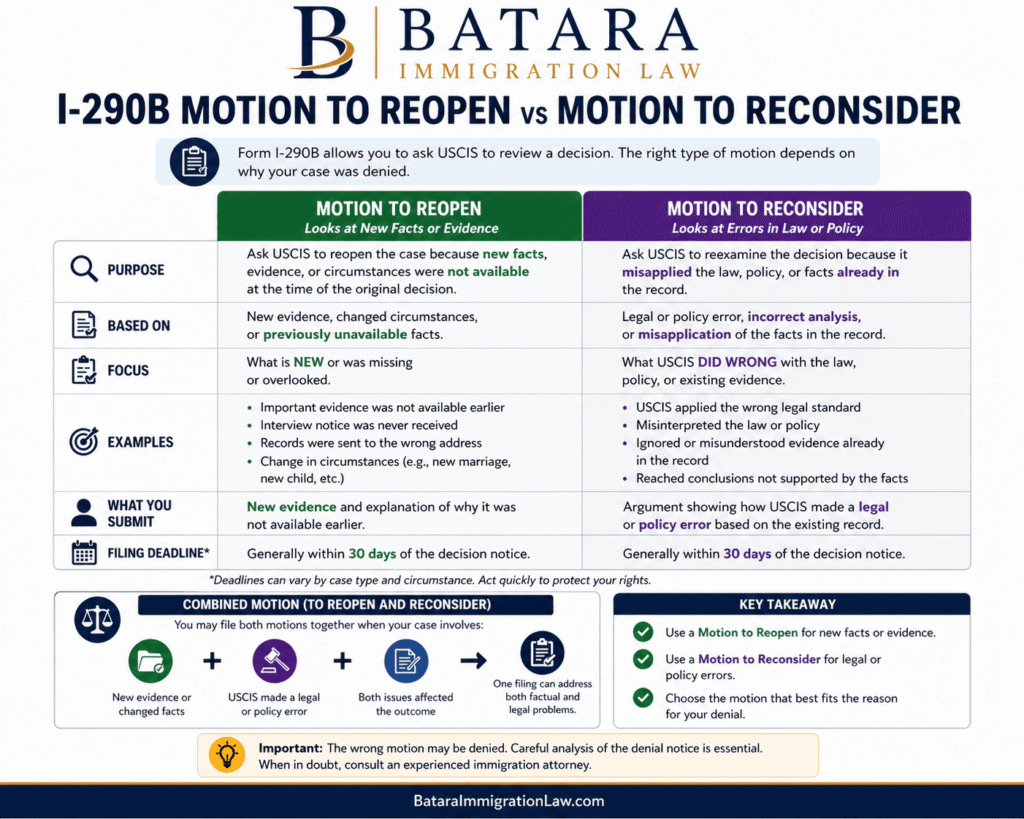
There are two classes of common USCIS mistakes, factual and legal, in permanent resident case denials. Challenges for both types of errors begin with the filing of Form I-290B.
- A USCIS motion to reopen asks that the decision be reevaluated based on the discovery of new evidence or changed circumstances.
- A USCIS motion to reconsider asks that the decision be reexamined based on the improper disregard or misinterpretation of applicable law.
Taking a closer look at a few examples will help clarify the differences.
Form I-290B is also be used to file administrative appeals to the Administrative Appeals Office (AAO) in certain types of cases.
This page focuses only on motions to reopen and motions to reconsider. AAO appeals involve different procedures and strategic considerations. AAO appeals are addressed separately.
What Is A Motion To Reopen?
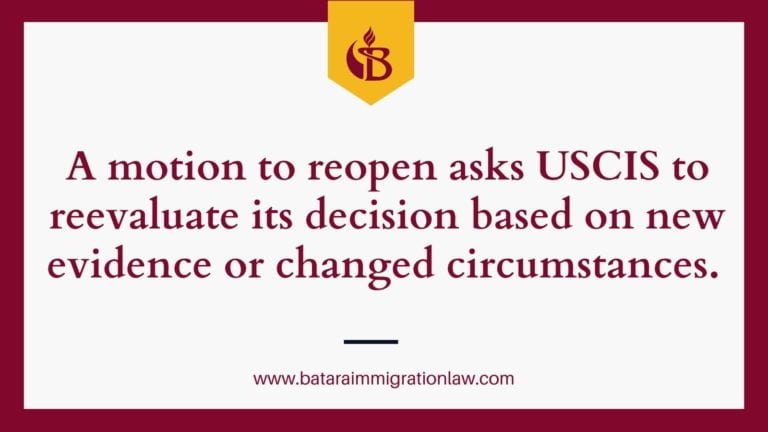
A motion to reopen asks USCIS to review the case again because important facts were unavailable, overlooked, or have changed. Sometimes factual mistakes can be simple to correct.
When To File A Motion To Reopen
Common reasons to file a motion to reopen include:
- Key documents that were not available at the time of the earlier filing or interview
- A USCIS notice was sent to the wrong address, preventing the applicant from responding or appearing
- Family or financial circumstances have changed in a way that affect eligibility
- A factual misunderstanding led to an incorrect determination by the government
- New supporting evidence has come to light that was not part of the original record
Motion To Reopen Example
Take Javier and Irene. Her adjustment of status application was denied because they failed to show up for their interview.
When they received notice of the USCIS decision, they were startled to learn their green card appointment had been scheduled. Upon discovering the interview notice was mailed to a wrong address, they promptly filed a motion to reopen.
Not all factual errors, of course, are quite as straight forward.
In a large number of cases, the claim that USCIS has failed to weigh certain facts falls short as a result of the couple’s personal neglect in fully providing the supporting evidence from the outset.
What Is A Motion To Reconsider?
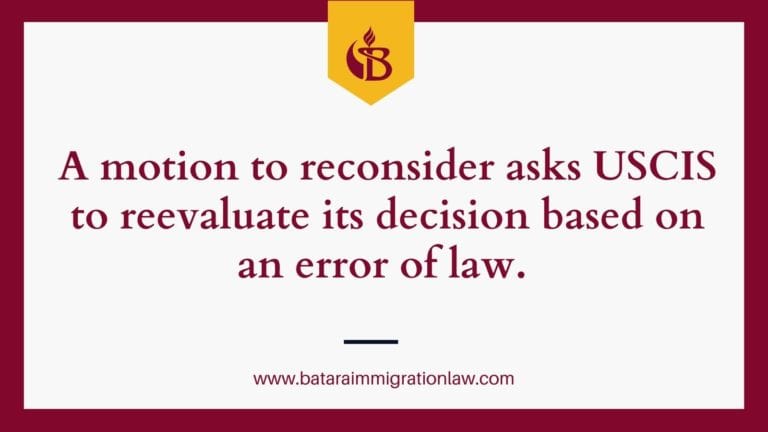
USCIS motions to reconsider takes a fundamentally different approach. It argues that the agency reached a wrong result based on the law, policy, or evidence in existence at the of its decision.
When To File A Motion To Reconsider
Common grounds to file a motion reconsider include:
- USCIS applied an incorrect legal standard to the case
- A controlling regulation, statute, or policy we ignored or misapplied
- Evidence and documents were misread, misinterpreted, or given improper consideration
- The reviewing officer’s conclusions were not logically supported by existing facts
- Relevant case law or agency precedent was overlooked
Motion To Reconsider Example
Gloria, born in Brazil, had entered the U.S. in her early 30s on a visitor visa. Because she was a college graduate, her uncle suggested she enroll at an adult school to learn English and live with his family until she could find suitable employment.
She attempted to renew her visa by driving to the port of entry and filing for an extension. Although the officer denied her request, and placed a rejection stamp in her passport, she was allowed to re-enter the U.S. since her visa had not yet expired.
At her marriage green card interview, the officer denied her application on the grounds that her last entry had been made without a rejected entry document.
In her USCIS motion to reconsider, Gloria argued that the law compelled an opposite conclusion. Because the officer had “waived her into the United States,” despite the rejection stamp, her entry constituted a lawful admission under existing law.
USCIS Motions vs. Immigration Court Motions: An Important Distinction
Do not confuse USCIS motions to reopen and reconsider with Immigration Court motions to reopen and consider. They are entirely separate. Even thought the terminology is similar, the rules, deadlines, and process are significantly different. If your case is in removal proceedings, you must follow Immigration Court procedures — not the USCIS Form I-290B process.
Combined USCIS I-290B Motions To Reopen And Reconsider
Other times a factual mistake is combined with a legal error.
When this happens, a motion to reopen and a motion to reconsider can be filed together, addressing both issues in a single I-290B application.
Combined Motion To Reopen And Reconsider Example
This was Lorena and Albert’s situation. Albert, the U.S. citizen and financial sponsor, was a low wage earner. Lorena had obtained legal documentation to work in the U.S. almost two decades ago when her father filed for family unity benefits.
She earned over three times the amount needed to meet the affidavit of support financial guidelines.
USCIS issued a denial of her permanent residence application based on Albert’s income.
The interviewing officer had failed to realize that because Lorena had more than 10 years of qualifying employment, she was exempt from the need to claim her husband’s income as her financial sponsor.
Lorena filed an I- 290B motion to reopen coupled with a I-290B motion to reconsider. Both motions were granted and she was granted permanent resident status.
Should You File Form 290B Or Refile Your Immigration Application Instead?
Sometimes, yes, it is better to refile.
If the original application was incomplete, poorly documented, or factually weak, filing a new application may be the better move. Attacking a denial with an I-290B motion only makes sense when you believe USCIS has made a clear mistake.
If the mistake was yours, refiling is your cleanest path forward.
Starting fresh gives you the opportunity to reframe the case more carefully.
For a broader look at your options when USCIS has denied your application, see our page on what happens if your marriage green card is denied is denied by USCIS.

BATARA IMMIGRATION LAW INSIGHTS
What Happens If Your Marriage Green Card Is Denied By USCIS?
I-290B Filing Deadlines: Don’t Wait Too Long
Filing deadlines for Form I-290B are strict. Missing them can permanently eliminate certain options.
In most I-290B cases, motions must be filed within 30 days of the date on the denial notice (with an extra three days if the USCIS decision was sent by mail).
As soon as you receive a USCIS denial notice, you should:
-
- Read the denial decision carefully and identify the stated reason(s)
- 2. Note the date on the decision
- 3. Determine whether a motion, appeal, or refiling is appropriate
- 4. Act promptly — ideally with the guidance of an immigration attorney
Unfortunately, in my experience as a permanent residence attorney, waiting too long is one of the most common — and most avoidable — mistakes that I have seen spouses make after a green card denial.
Review And Update
This page has been reviewed by Carlos Batara, Harvard Law School graduate and immigration attorney. He has represented immigrants and families for over 30 years in green card denials, motions, appeals, and complex immigration matters.
Last updated: May 2026Frequently Asked Questions About I-290B Motions
Is Form I-290B always better than refiling a new application?
No. The right choice depends on the reason for the denial, the strength of your original record, and your current circumstances. In some cases, refiling is stronger; in others, an I-290B motion is the better path.Can I submit new evidence with my I-290B motion?
Generally yes, for motions to reopen, depending on the circumstances of the case. New evidence is typically not permitted in motions to reconsider, which are limited to arguments about legal error based.Are motions to reconsider harder to win than motions to reopen?
Often they can be. Motions to reconsider require showing that USCIS made a legal or analytical mistake, which demands a strong understanding of the applicable law, regulations, and policy. They are generally more technical than factual motions to reopen.Can I file both a motion to reopen and a motion to reconsider at the same time?
Yes. In many cases, a combined motion is appropriate. Because factual and legal issues often overlap, addressing both in a single filing can strengthen the overall argument.How long does USCIS take to decide on an I-290B motion?
Processing times vary. It depends on the case type, the USCIS office handling the motion, and overall agency workload. Some motions can take many months to adjudicate. Others move more quickly.Does filing Form I-290B guarantee that my case will be approved?
No. Filing a motion preserves your ability to challenge the denial and gives USCIS the opportunity to correct a mistake. Approval is never guaranteed. Success depends on the strength of the evidence and legal arguments presented.What happens if USCIS denies my I-290B motion?
If USCIS denies your motion, you may still have options. These might include pursuing a different immigration strategy, filing a new application, or, in some cases, seeking further review with the Administrative Appeals Office (AAO).Can I file Form I-290B while also pursuing an appeal?
In some cases, a motion and an appeal can be filed in sequence or, less commonly, at the same time. However, filing both, even when appropriate, can cause procedural complications. Careful review of your case is essential before pursuing both options at once,Can an immigration attorney file Form I-290B on my behalf?
Can an immigration attorney file Form I-290B on my behalf? Yes. An attorney can prepare and file an I-290B motion on your behalf. Given the technical nature of these filings, particularly motions to reconsider, legal counsel can help strengthen the clariy and persuasiveness of your motion.What makes an I-290B motion strong?
A strong motion directly addresses the reason for denial, clearly identifies factual or legal errors, and presents well-supported evidence or arguments. General disagreement with the USCIS decision is not enough.Marriage Green Card Immigration Assistance Throughout Hemet, San Bernardino County, And Riverside County
A denial from USCIS is not always the end of the road.
A denied marriage green card case can place your future in the United States at risk. But you still have options.
The right response may involve filing a new adjustment of status application, filing a motion to reopen or reconsider, or pursuing a different immigration strategy.
Careful legal guidance can make the difference between setbacks and a stronger path forward.
If you need help after a denied marriage-based green card case, learn more about our regional offices and service hubs here:
No matter where you live, we are committed to protecting your rights, exploring every available option, and helping families remain together whenever the law allows.
Nationwide Representation: Many clients also choose to work with our office remotely through our Virtual Immigration Law Office, enabling individuals and families across California and the United States to receive experienced immigration representation without needing to travel for in-person meetings.
Ready to take a serious and honest look at the strengths and weaknesses of filing an I-289B motion?
Let’s get started. Schedule a personalized strategy and planning session today.