A denial of Form I-485, Application to Register Permanent Residence or Adjust Status can be devastating, but it is not always the end of the case.
The reasons for the USCIS denial determine whether couples still have meaningful options.
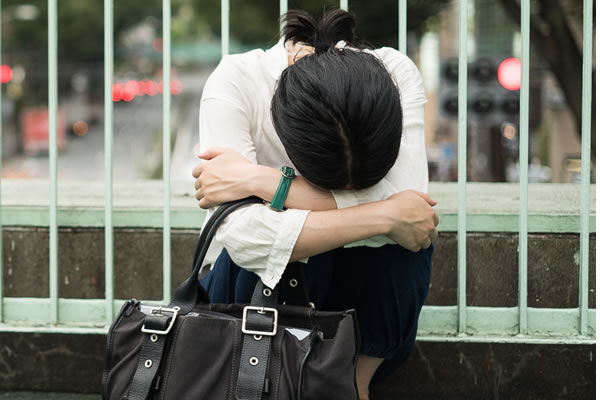
Not all green card marriage interviews have happy endings.
Sometimes immigrants lose, even those married to U.S. citizens.
In the process, they lose money. They lose time.
Worst of all, they face permanent separation. Their once sturdy marital union is now on the rocks.
However, many marriage green card denials can be overcome.
So long as couples do not lose hope and courage, so long as they do not fall victim to helpless despair, many adverse U.S. Citizenship and Immigration Services (USCIS) decisions can be reversed.
Depending on why the case was denied, the strongest next step may be to walk away for now, refile, or challenge the decision.
In this article, you will learn what options exist to preserve family unity in the aftermath of denied marriage-based green cards.
It focuses primarily on the denial of Form I-485, the application used to request permanent residene through adjustment of status.
Carlos Batara is a Harvard Law School graduate and immigration attorney who has represented immigrants and families for over 30 years in complex green card denials, motions, appeals, and deportation matters.
Table Of Contents
- What Options Exist When Your I-485 Marriage Green Card Application Is Denied?
- Why Was Your I-485 Marriage Green Card Application Denied?
- How To Avoid An I-485 Adjustment Of Status Denial Before It Happens
- Option 1: Walk Away From Your Marriage Green Card Denial Without Taking Any Action
- Option 2: Regroup And Refile After An I-485 Marriage Green Card Denial
- Option 3: Challenging The 485 Marriage Green Card Denial With I-290B Motions
- What If Your USCIS I-290B Motions To Reopen Or Reconsider Are Denied?
- Frequently Asked Questions About I-290B Motions
What Options Exist When Your I-485 Marriage Green Card Application Is Denied?
- Walk away for now and reassess your situation.
- File a new marriage green card application if the problems can be corrected.
- Challenge the denial through a Form I-290B motion to reopen, motion to reconsider, or both.
The correct response, of course, depends largely on the reason USCIS denied the case.
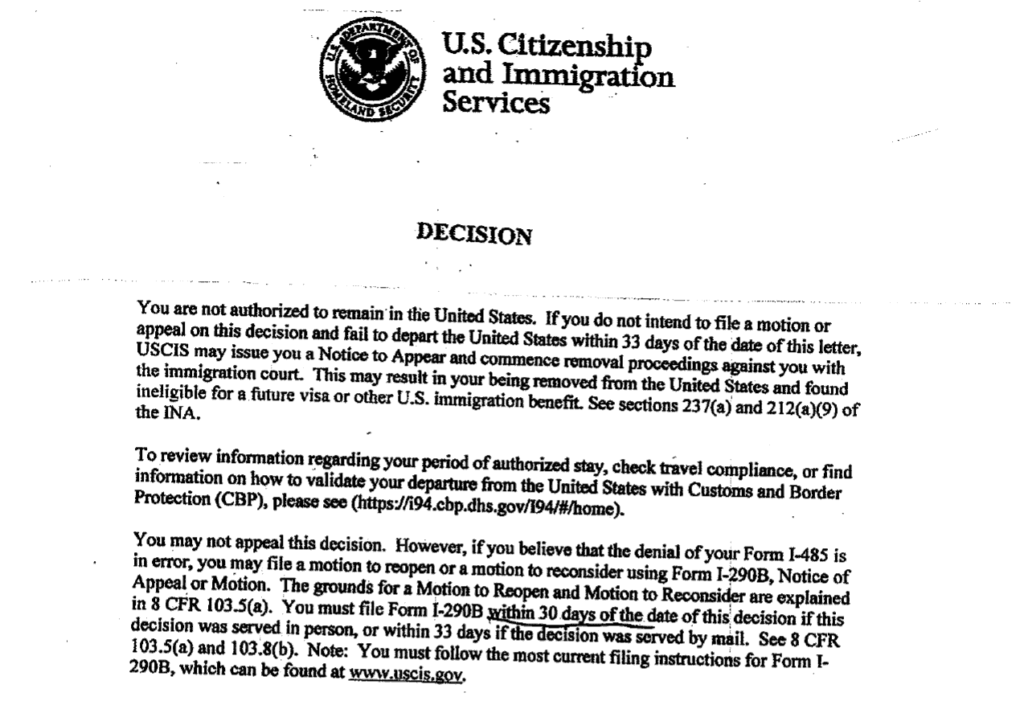
Why Was Your I-485 Marriage Green Card Application Denied?
Let’s start at the beginning. Why were your efforts to win a green card rebuffed?
The first step in effectively challenging a marriage green card decision is to figure out why your case was denied. Once the basis for the USCIS decision is known, options to appeal the outcome can be identified.
The most common pitfalls, as explained in Green Cards Through Marriage: Eight Mistakes To Avoid, include:
- The marriage is not bona fide
- The marriage is not legal
- Living in the U.S. without lawful status
- Criminal convictions
- Inability to meet financial requirements
- Incomplete application details
- Insufficient supporting evidence
- Poor interview preparation
As this short list of potential problems point out, it is critical for couples to avoid trivializing the complexity of the green card marriage process.
If USCIS denied the underlying I-130 petition because it questioned whether your marriage is genuine, review our guide on how to prevent and overcome spousal I-130 petition denials.
How To Avoid An I-485 Adjustment Of Status Denial Before It Happens
In most cases, USCIS will not simply deny your I-485 application to adjust status to permanent residence.
Rather, you will be sent a Request For Evidence. If you fail to respond or if your response is deemed inadequate, the government will then serve you with a decision outlining the reasons it has found your green card application defective.
This means many immigrants and their U.S. spouses have an opportunity to avoid a marriage green card denial before the adverse decision is issued.
At this stage, corrective actions can be taken.
The government rarely catches couples completely off-guard.
In my experience as a permanent residence lawyer, I’ve learned that far often the failure to correct application shortcomings occur when married couples have handled their cases on their own, or with the assistance of a family member, paralegal, or notario.
In other words, many marriage green card denials are not inevitable.
Because the RFE specifies the concerns of immigration authorities about the paperwork you have submitted, experienced immigration counsel can usually guide you and your spouse successfully past this stage of your green card application process.
When the outcome of your immigration case is at stake, an ounce of prevention is worth a pound of cure. Don’t take the task of responding to the RFE lightly. Seek professional assistance if possible.
Moreover, the success of using one of the two USCIS motions discussed in this article quite often depends on the framework you establish in your response to the request for evidence.
Option 1:
Walk Away From Your Marriage Green Card Denial Without Taking Any Action
Do nothing more. Accept the denial. For now.
Say what?
Walk away without fighting back?
Yes, sometimes the most prudent course of action is to do nothing.
Quite often, doing nothing immediately is not surrender. It is strategy.
You’re probably wondering, why would a husband and wife walk away from a failed effort to procure permanent resident status?
In short, when the marriage green card application should not have been filed in the first place. It was doomed from the outset.
This usually happens when couples have been the victim of professional incompetence or have tried to handle their case on their own and made a glaring error.
I’ve seen too many cases where flawed legal advice has led couples down the wrong path.
In these instances neither a Form I-290B motion to reopen nor a Form I-290B motion to reconsider will help the green card applicant.
The immigrant spouse was not eligible to seek adjustment of status via an interview at a local USCIS office – and whomever was responsible for the misguided submission of the green card application should have known better.
Adjustment Of Status vs Consular Processing
If you are an immigrant living in the U.S., permanent residence green cards are obtained in two different ways: either at an adjustment of status interview at a local USCIS district office or by the issuance of an immigrant visa at a United States consulate or embassy abroad.
For almost all immigrants, remaining in the U.S. and being interviewed at a local office is the preferred option. Yet, for some, adjustment of status is not possible. They must seek their green cards through consular processing abroad.
If you’re married to a U.S. citizen, and your entry was lawful, you might qualify for a marriage-based green card through adjustment of status.
On the other hand, if you’re married to a U.S. citizen, but you entered the U.S. without inspection, then you’ll likely need to attend your permanent residence interview in your home country.
There are a few exceptions to these rules, but which option best suits your immigration history should be discernible by the person selected to help lead you and your spouse through the green card maze.
If you proceed to seek permanent residence abroad via consular processing, utilizing a Form I-290B motion to reopen or Form I-290B motion to reconsider to fight a negative decision will not be applicable.
Besides illegal entry and unlawful presence, there are other red flag situations warranting caution. Some are not always apparent at first blush.
- The immigrant spouse has been convicted of certain criminal offenses.
- The immigrant spouse has a communicable disease, a mental illness, or a history of drug abuse.
- The immigrant spouse entered on a tourist visa but may have intended from the beginning to marry and remain permanently in the United States.
- The immigrant spouse entered on a K-1 fiancé visa filed by a different petitioner, did not marry that petitioner, and later married someone else.
In these situations, it is generally better to let sleeping dogs lie.
You cannot attack these situations directly.
Neither filing a new permanent residence application nor challenging the USCIS decision with a Form I-290B motion to reopen or a Form I-290B motion to reconsider is likely to succeed.
But walking away from your denied marriage green card application does not mean you should simply do absolutely nothing.
Instead, you need to move into “Plan B” mode.

Option 2:
Regroup And Refile After An I-485 Marriage Green Card Denial
If USCIS rejects your application for adjustment of status, you will be mailed a written decision that provides the reason for the denial.
Most denials are made without prejudice. This means you can file a new application for permanent residence.
This may be your best course of action if the problems which caused your marriage-based green card application to be denied can be cleared up before refiling.
Refiling is often the best option when the original case could likely have been approved with stronger evidence and better preparation.
For example, Robbie, a U.S. citizen, and Yvonne, a couple in their late 20s, visited my San Bernardino immigration law office shortly after their adjustment of status application was denied.
Yvonne had entered lawfully as a teenager on a tourist visa. She remained in the U.S. with her aunt. She had no convictions and she worked as a caregiver. They had met at a community event while Robbie was serving at a nearby military base.
Over the course of the next few years, their grew closer together and decided to marry even though Yvonne’s live-in responsibilities prevented them from living together 5 of 7 days per week.
Robbie had been reassigned to a new base about 75 miles away. Once he completed his tour of duty, he planned to move closer to Yvonne’s work location and enroll at the local college.
The government doubted the legitimacy of their marriage due not only to their unusual living situation, but also to their lack of joint expenses.
Aside from such shortcomings, their application could have been granted. Yvonne’s case was not marred by insurmountable complications, such as criminal convictions, medical issues, illegal entry, and visa fraud.
As in many of these types of situations, Yvonne and Robbie had used the services of an immigration assistance office. The I-485 paperwork was technically correct. The packet of information to substantiate the marriage was woefully inadequate.
Because they had the opportunity to submit such supporting documents in their earlier application, but failed to do so, filing a USCIS motion to reopen their case based on new facts would most likely fall short.
Reapplying for permanent residency benefits was the best option for them. It required fixing the holes in their evidence. It required better preparation.
Option 3:
Challenging The I-485 Marriage Green Card Denial With I-290B Motions
When should you directly challenge the USCIS decision with a I-290B motion to reopen or a I-290B motion to reconsider its denial?
Simply stated, when you believe the immigration officer has made a factual or legal error.
There are two classes of common USCIS mistakes, factual and legal. Both types of challenges begin with the filing of Form I-290B.
- A USCIS motion to reopen asks that the decision be reevaluated based on the discovery of new evidence or changed circumstances.
- A USCIS motion to reconsider asks that the decision be reexamined based on the improper disregard or misinterpretation of applicable law.
Other times a factual mistake is combined with a legal error. In such instances, a motion to reopen can be combined with a motion to reconsider.
For a deeper comparison of motions to reopen versus motions to reconsider, see our I-290B guide.
Important Deadline Warning: In most Form I-290B cases, the filing deadline is 30 days from the USCIS decision. Missing that deadline may eliminate an opportunity to challenge the denial.
What If Your USCIS I-290B Motions To Reopen Or Reconsider Are Denied?
If your motion to reopen or reconsider is denied, you will likely be served with an Notice To Appear at Immigration Court to begin removal proceedings.
This is not the time to give up.
The immigration judge will ask what forms of relief you plan to present.
Depending on your individual circumstances, you might be able to renew your permanent residence application, this time to be adjudicated by the judge.
To the extent your green card marriage was denied by USCIS due to deficient preparation, this should be your first option.
(This assumes, as discussed earlier, you are not prohibited due to blemishes such as criminal offenses, commission of fraud, or other statutory disqualifications.)
Winning a marriage-based green card at immigration court is more difficult than winning a grant of permanent residence at an adjustment of status interview. The judge will look at your case in greater depth than a USCIS officer.
Both you and your U.S. citizen spouse will be asked to testify. You will be cross-examined by a government attorney. The judge, too, may also ask questions.
On the plus side, you can present witnesses who can give live supporting testimony about your marriage. In addition, you can supplement the evidence you provided with the I-485 application with new documents.
(Editor’s Note: Do not confuse Immigration Court motions to reopen and reconsider with USCIS motions to reopen and reconsider. Although the names are similar, the legal procedures, deadlines, and processes differ.)
Review And Update
This page has been reviewed by Carlos Batara, Harvard Law School graduate and immigration attorney. He has represented immigrants and families for over 30 years in green card denials, motions, appeals, and complex immigration matters.
Last updated: April 2026
Frequently Asked Questions About Marriage Green Card Denials
Can I file again after my marriage green card was denied?
Often yes. Many denials can be followed by a new filing, especially if the original problems can be corrected. If USCIS previously issued a Request For Evidence, the RFE and denial notice often help identify what must be fixed.
Can USCIS deny a real marriage?
Yes. A genuine marriage can still be denied if the evidence presented is weak or another legal issue exists. Common reasons for denial include financial sponsorship problems, inadmissibility issues, or procedural mistakes.
The government may claim your marriage is not bona fide, which means USCIS doubts the marriage was entered into in good faith.
How quickly should I act after denial?
Promptly. Some post-denial options have short deadlines. If you take no action, your delay can increase the risk of losing viable legal options for response.
Some applicants may receive a Notice To Appear at Immigration Court after 30 days have passed.
Will I be deported if my marriage green card was denied?
Not automatically. However, some applicants may receive a Notice To Appear to Immigration Court.
This means the government has filed removal charges against you. You are entitled to defend yourself, including the filing of a new application for permanent residence at court.
Can missing documents cause denial?
Yes. Incomplete records or weak responses to RFEs can contribute to denial.
For instance, some couples believe a marriage certificate is all they need to prove that they are legally married. If one spouse does not have an official divorce certificate from a previous marriage, the government is likely to conclude the current marriage is invalid.
What if my spouse and I were nervous at the interview?
Interview problems do happen. Inconsistencies, confusion, or poor preparation may affect outcomes.
If you and your spouse were questioned separately, you were likely placed in what is known as a Stokes interview. This means the government probably has doubts about the authenticity of your marriage.
Can criminal history affect a marriage green card case?
Yes. Certain criminal issues can create eligibility or admissibility problems.
Even convictions that took place abroad can have an adverse impact on the immigrant spouse’s ability to become permanent resident of the United States.
Additionally, under the Adam Walsh Act, certain convictions of the petitioning spouse can prohibit the approval of the I-130 petition
Green card applicants and their spouses should consult with legal counsel when there is a history of arrests or convictions
What if I entered the United States illegally?
Illegal entry can limit adjustment options and require different strategic concerns.
Sometimes, a couple can still proceed under INA 245(i) grandfathering provisions, parole history, or programs like the Deferred Action For Childhood Arrivals (DACA) may offset the illegal entry for purposes of seeking lawful permanent residence.
Immigration Marriage Green Card Assistance Throughout Hemet, San Bernardino County, And Riverside County
A denial from USCIS is not always the end of the road.
A denied marriage green card case can place your future in the United States at risk.But you still have options.
The right response may involve filing a new adjustment of status application, filing a motion to reopen or reconsider, or pursuing another strategy.
Careful legal guidance can make the difference between setbacks and a stronger path forward.
If you need help after a denied marriage-based green card case, learn more about our regional offices and service hubs here:
No matter where you live, we are committed to protecting your rights, exploring every available option, and helping families remain together whenever the law allows.
Nationwide Representation: Many clients also choose to work with our office remotely through our Virtual Immigration Law Office, enabling individuals and families across California and the United States to receive experienced immigration representation without needing to travel for in-person meetings.
Conclusion
Denials of marriage-based green card applications are not uncommon.
Despite the common belief that adjustment of status through marriage to a U.S. citizen is the surest path to permanent residence, denials happen far more frequently than many immigrants suspect.
To reiterate, many USCIS denials can be countered with either a new application, properly prepared, or I-290B motions to reopen or I-290B motions to reconsider due to government miscues.
Other times, the battle spills over to immigration court.
In any of these situations, seeking professional assistance is in your best interests.
With the stakes so high – win or go home – challenging a denied marriage green card application is too risky to fight alone.
So don’t try it.
Ready to take a serious and honest look at the denial of your marriage green card application and explore your options for challenging that decision?
Schedule a personalized strategy and planning session today.